How I Fixed My Balance and Repaired My Body—From Wobbly to Strong
Ever feel unsteady on your feet or notice your body just… off? I did. After months of ignoring it, I committed to a systematic balance training routine—and saw real changes. My posture improved, my joints felt freer, and daily movements became smoother. This isn’t about quick fixes. It’s about rebuilding stability from the ground up. If your body feels out of sync, this journey might be what you need. Balance is not a luxury reserved for athletes or dancers; it’s a fundamental part of how we move, carry ourselves, and protect our bodies from strain. When it’s compromised, everything from walking up stairs to standing in the kitchen becomes less efficient and more taxing. The good news? Balance can be retrained at any age. With consistency, awareness, and the right approach, even long-standing instability can be reversed. This is not a story of overnight transformation, but of steady, science-backed progress—one small shift at a time.
The Hidden Problem: Why Poor Balance Goes Unnoticed
Most people don’t think about balance until something forces them to—like nearly tripping on level ground, struggling to step into the shower without grabbing the wall, or feeling wobbly when standing on one foot to tie a shoe. These moments are often dismissed as minor slips or signs of aging. But they are not normal. They are signals that the body’s stability systems are weakening. Poor balance is not just a risk for older adults; it affects individuals across all age groups, especially those with sedentary lifestyles. The truth is, modern living has quietly eroded our natural stability. Long hours spent sitting at desks, minimal exposure to uneven terrain, and the constant use of supportive footwear have reduced the need for our muscles and nervous system to work together to keep us upright. As a result, the small stabilizing muscles in the feet, ankles, hips, and core grow underused and weak.
Signs of imbalance are subtle but telling. You might sway slightly when standing still with your eyes closed, or feel unsteady when stepping off a curb. You may notice that you lean more on one leg than the other, or that your shoes wear down unevenly. Clumsiness—knocking over objects, misjudging distances, or stumbling on flat surfaces—can also point to underlying coordination issues. Chronic tension in the lower back, hips, or knees may not only stem from poor posture but also from the body compensating for instability. When balance is off, the body recruits larger muscles to do the job of smaller stabilizers, leading to fatigue, strain, and discomfort over time. These symptoms are not inevitable consequences of aging; they are early warnings that the body’s foundation is weakening.
Ignoring these signs can lead to more serious consequences. Research shows that poor balance is a strong predictor of falls, even in middle-aged adults. But beyond injury risk, compromised balance affects how efficiently we move. It makes everyday activities—carrying groceries, walking up stairs, or playing with grandchildren—more difficult and less enjoyable. The good news is that balance is not fixed. It is a skill, and like any skill, it can be improved with targeted practice. The first step is recognizing that balance is not just about not falling—it’s about how well your body coordinates movement, supports itself, and adapts to changes in terrain or position. By reframing balance as a core component of physical health, we begin to see it not as a symptom of decline but as an opportunity for renewal.
The Science Behind Balance: More Than Just Standing on One Leg
Balancing on one foot may seem like a simple act, but it involves a sophisticated network of systems working in harmony. The human body maintains equilibrium through three primary inputs: the vestibular system in the inner ear, proprioception from muscles and joints, and visual information from the eyes. These systems constantly communicate with the brain to adjust posture, coordinate movement, and respond to changes in the environment. The vestibular system detects head motion and spatial orientation, helping us know which way is up. Proprioception, often called “body awareness,” allows us to sense where our limbs are in space without looking. And vision provides real-time feedback about our surroundings, helping us navigate obstacles and maintain alignment.
When one of these systems is impaired, the others try to compensate. For example, if you wear tight or overly cushioned shoes, the sensory nerves in your feet become less active, reducing proprioceptive feedback. Your body then relies more heavily on vision and the vestibular system, which can lead to overcompensation and fatigue. Similarly, if you have neck stiffness or limited head movement, the vestibular system may not function optimally, making you feel unsteady, especially in low-light conditions or when your eyes are closed. Over time, these imbalances can lead to poor movement patterns, increased joint stress, and a higher risk of injury. The body adapts to inefficiency, but adaptation is not the same as health.
The beauty of balance training is that it strengthens all three systems simultaneously. Simple exercises—like standing with your feet together and eyes closed—challenge the body to rely more on proprioception and the vestibular system. Walking slowly heel-to-toe along a straight line improves coordination and spatial awareness. Turning your head side to side while walking engages the vestibular system and enhances dynamic stability. These activities may seem basic, but they send powerful signals to the brain, reinforcing neural pathways and improving communication between the body and mind. With consistent practice, the brain learns to process sensory information more efficiently, leading to smoother, more confident movement.
Neuroplasticity—the brain’s ability to adapt and reorganize—plays a key role in balance improvement. Just as learning a new language strengthens cognitive connections, balance exercises strengthen motor control. Studies have shown that even six weeks of regular balance training can lead to measurable improvements in postural control and reduced sway. The changes are not just physical; they are neurological. The body becomes more responsive, more aware, and more resilient. This is not about achieving perfection in a single pose but about cultivating a deeper connection to how you move through the world. Balance, in this sense, is not just physical—it is a form of body intelligence.
My Turning Point: From Frustration to Action
The moment I realized something was wrong came on an ordinary Tuesday. I was walking across a flat parking lot when my foot caught on a slight rise in the pavement. I didn’t fall, but I stumbled—hard—grabbing a car door to steady myself. I was embarrassed and shaken. At 48, I didn’t expect to trip on level ground. Later that week, I noticed I was holding onto the counter while brushing my teeth, not because I was tired, but because I felt unsteady. I started paying attention, and the signs were everywhere: I avoided stepping off curbs without support, I felt fatigued after short walks, and I hesitated before climbing stairs. These weren’t dramatic symptoms, but together, they painted a picture of a body that was no longer functioning smoothly.
I felt frustrated. I exercised regularly—I walked, did light strength training, and stretched—but none of it had addressed the root issue. I wasn’t weak, but I was uncoordinated. My movements lacked precision. I began to worry: was this the beginning of decline? Would I one day need a cane or fall and break a bone? The fear was real, but so was the determination to do something about it. I decided to stop ignoring the signs and start listening to my body. I consulted a physical therapist, who confirmed what I suspected: my balance was poor, not because of a medical condition, but because I had never trained it. My stabilizing muscles were underused, my proprioception was dull, and my nervous system wasn’t getting the input it needed to keep me steady.
That conversation was my turning point. I realized that balance wasn’t something I could assume I had—it was something I needed to practice. I also understood that starting small was not a sign of weakness but a smart, sustainable approach. I didn’t need to stand on a wobble board for hours or do complex yoga poses. I needed to rebuild from the ground up, starting with awareness. My mindset shifted from avoidance to curiosity. Instead of seeing my body’s instability as a flaw, I began to see it as a signal—an invitation to repair, strengthen, and reconnect. This wasn’t about fixing a problem; it was about reclaiming a fundamental part of my physical self.
Building a Systematic Routine: The Four-Phase Approach
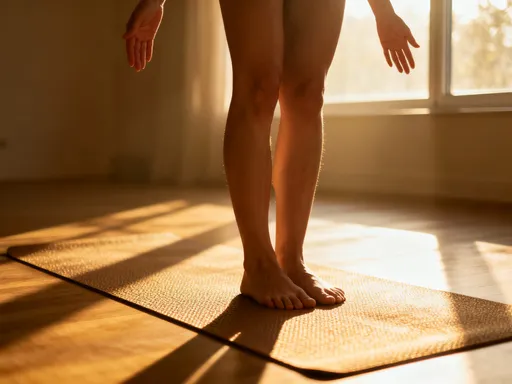
With guidance from my physical therapist, I developed a structured, progressive routine that allowed my body to adapt safely and effectively. I called it the Four-Phase Approach, and it became the foundation of my recovery. Phase One was all about awareness. I started with simple static balance exercises: standing with my feet hip-width apart, arms at my sides, focusing on my posture. I paid attention to how my weight distributed across my feet—was I leaning forward? Back? To one side? I practiced shifting my weight slightly, learning to make micro-adjustments without losing balance. Then, I closed my eyes. This removed visual input and forced my body to rely on proprioception and the vestibular system. At first, I swayed dramatically, but over time, I became more stable. These exercises took only five minutes a day, but they trained my nervous system to be more attentive.
Phase Two introduced movement. I progressed to weight shifts—slowly transferring my weight from heel to toe, side to side, and in small circles. I practiced the tandem stand (one foot directly in front of the other) and the tandem walk (heel-to-toe along a straight line). These movements improved coordination and challenged my body to maintain balance while in motion. I also added controlled reaches: standing on both feet and slowly reaching one arm forward, then to the side, then overhead, returning to center each time. This taught my core and stabilizing muscles to engage during dynamic actions. I performed these exercises barefoot whenever possible, to maximize sensory feedback from the feet.
Phase Three increased the challenge by introducing instability. I stood on a folded towel, a foam pad, or a balance disc—surfaces that moved slightly underfoot. This forced my muscles to work harder to maintain alignment. I started with short durations—30 seconds at a time—and gradually built up. I also practiced single-leg stands on these surfaces, always near a wall or sturdy chair for safety. This phase was humbling. I wobbled, I lost balance, I had to grab on more than once. But each attempt strengthened my neuromuscular control. The brain was learning, the muscles were adapting, and my confidence was growing.
Phase Four integrated real-world challenges. I practiced stepping over small objects, turning 180 degrees while balanced, and walking while carrying a light load like a book or a water bottle. These dynamic tasks mimicked everyday movements and trained my body to stay stable under varied conditions. I also incorporated balance into my walks—pausing occasionally to stand on one foot, or walking along a curb. By this stage, the exercises felt less like training and more like natural movement. The progression was gradual, but the results were undeniable. I was steadier, more coordinated, and more aware of how I moved. The routine took only 10 to 15 minutes a day, but it transformed my relationship with my body.
Daily Life as Training Ground: Turning Habits into Healing
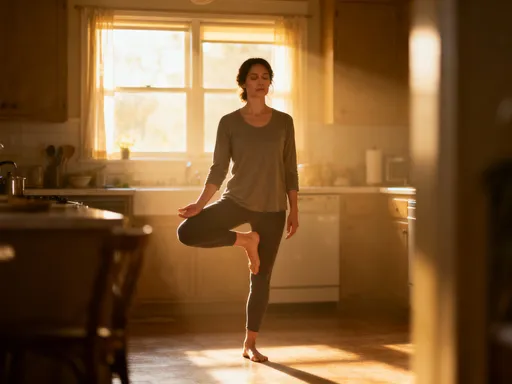
One of the most powerful lessons I learned was that balance training doesn’t have to happen in a formal setting. Every moment of daily life can become an opportunity to strengthen stability. I began turning routine activities into micro-training sessions. While brushing my teeth, I stood on one foot, switching sides halfway through. While waiting in line at the grocery store, I subtly shifted my weight, engaged my core, and rolled through my feet with each small movement. Walking through a parking lot, I focused on heel-to-toe alignment and even weight distribution. These small, mindful actions kept my nervous system engaged and reinforced the work I did during formal practice.
I also made changes to my footwear. I started spending more time barefoot at home, especially on textured surfaces like rugs or mats, to stimulate the sensory nerves in my feet. When I did wear shoes, I chose minimalist styles with flexible soles that allowed my feet to move naturally. I avoided high heels and overly cushioned sneakers that dulled my proprioception. I even began gardening barefoot when the weather allowed, feeling the uneven ground beneath my feet and letting my body respond to subtle shifts in terrain. These simple choices amplified the benefits of my training.
The key was consistency, not intensity. I didn’t need to spend hours exercising. Just a few minutes of mindful movement throughout the day made a difference. I also learned to listen to my body. If I felt fatigued or unsteady, I scaled back. If I felt strong, I gently increased the challenge. This approach turned balance training into a sustainable habit, not a chore. It became a form of self-care—a quiet way to stay connected to my body and honor its needs. Over time, these small actions added up, creating a foundation of stability that supported everything else I did.
The Ripple Effects: How Balance Training Repaired My Whole Body
Improving my balance did more than prevent wobbling—it transformed my entire physical experience. One of the first changes I noticed was in my posture. My shoulders relaxed, my spine felt more aligned, and I stood taller without effort. This wasn’t just cosmetic; it reduced tension in my neck and upper back, areas that had long been tight from years of slouching at a desk. My lower back pain, which I had accepted as normal, began to fade. I realized that much of it had stemmed from poor alignment and inefficient movement. When my body was stable, it didn’t have to overcompensate, and the strain decreased.
Simple movements became easier. Bending down to tie my shoes, picking up a bag from the floor, or reaching into a high cabinet no longer required bracing or hesitation. I could move with fluidity and confidence. Even my walking changed. My steps became more even, my stride smoother, and my endurance improved. I could walk longer distances without fatigue because my gait was more efficient. Joint pain in my knees and hips diminished as my movements became more aligned and controlled. I no longer felt like my body was working against itself.
Sleep improved, too. I attributed this to reduced muscle tension. When my body wasn’t constantly fighting to stay balanced, it could relax more fully at night. I fell asleep faster and woke up feeling more refreshed. Even my mood lifted. There’s a quiet confidence that comes from feeling physically capable. I no longer worried about falling or looking clumsy. I felt more present in my body, more in control. These benefits were not isolated—they were interconnected. Balance, I realized, was not a single skill but a gateway to full-body coordination, resilience, and well-being. When the foundation is strong, everything else functions better.
Staying on Track: Making Balance a Lifelong Practice
Sustainability is the final piece of the puzzle. Balance training is not a cure; it is an ongoing practice. Just as we brush our teeth daily to maintain oral health, we must train balance regularly to maintain stability. I’ve made it a non-negotiable part of my routine. I schedule short sessions each morning—sometimes just five minutes—before I start my day. I use reminders on my phone and keep a foam pad near my coffee maker as a visual cue. I track my progress not by perfection, but by subtle improvements: holding a single-leg stand longer, feeling steadier on stairs, or noticing less sway during daily tasks.
I’ve also learned to adapt my routine as my needs change. Some days, I stick to basic standing exercises. Other days, I challenge myself with dynamic movements. I listen to my body and respond with care. I no longer see balance as a problem to fix but as a practice to nurture. It has become a quiet act of self-respect—a daily commitment to moving well, feeling strong, and staying connected to my body. For women in their 30s, 40s, 50s, and beyond, this is not just about preventing falls. It’s about maintaining independence, vitality, and confidence. It’s about showing up in life with strength and grace. Balance, in the end, is not just physical. It is a reflection of how we care for ourselves—one mindful step at a time.