More than tracking: Diet tools that quietly made my life calmer and clearer
Living well used to feel like a constant battle—meal planning, cravings, energy crashes. I tried rigid rules and endless lists, but nothing stuck. Then I discovered a new kind of diet tech, not about counting every calorie, but about reducing daily stress. These tools didn’t shout solutions; they gently adjusted my habits, helped me listen to my body, and brought real peace to my routine. It wasn’t perfection—it was progress, quietly supported by smart, thoughtful design. And honestly? The change didn’t come from willpower. It came from finally having support that felt like it was made for real life, not a lab experiment.
The Morning Struggle That Changed Everything
Every morning started the same: eyes barely open, feet dragging to the kitchen, hand reaching for the sugar bowl before the coffee had even finished brewing. I’d stir two, sometimes three spoons into my mug, knowing it wasn’t the best choice but feeling too foggy and tired to care. That sugar rush gave me five minutes of false energy, then came the crash—head pounding by 10 a.m., stomach growling by 11, and the whole cycle repeating with a granola bar, then a soda, then another coffee. I wasn’t living; I was reacting. And the worst part? The guilt. That quiet voice in the back of my head saying, “You promised you’d do better today.”
What I didn’t realize then was that my problem wasn’t lack of discipline—it was lack of support. I had dozens of diet apps on my phone, all telling me what to eat, how much to eat, and when to eat it. But none of them asked how I was feeling. None of them knew I hadn’t slept well or that my youngest had woken up crying three times the night before. I needed something that met me where I was, not where some perfect version of me was supposed to be.
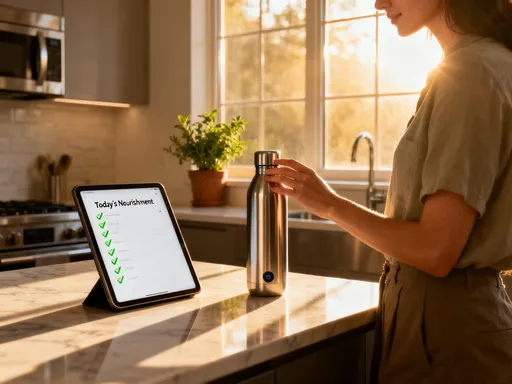
Then I got a smart water bottle—nothing flashy, just one that glowed softly when it was time to drink. The first few days, I ignored it. But slowly, something shifted. I started noticing that when I actually drank water first thing, my head felt clearer. My hands stopped shaking. I didn’t crave sugar as much. And the best part? I didn’t have to remember. The bottle remembered for me. It wasn’t enforcing rules; it was offering care. That small act—hydration without effort—became the first quiet win in a day that used to feel like a war zone.
It made me wonder: what if more of my routine could feel like this? Not strict, not exhausting, but gently guided? I wasn’t looking for a total overhaul. I just wanted to feel like myself again—calm, capable, in control without having to fight for it.
How Local Grocery Apps Became My Secret Wellness Partner
Grocery shopping used to be my least favorite part of the week. I’d walk into the store already tired, kids in tow, list in hand, only to find half the items were out of stock or way more expensive than I remembered. Then I’d wander the aisles, overwhelmed, grabbing whatever looked quick and easy. Frozen meals. Snack packs. Anything to get us fed without another meltdown—mine or theirs. By the time we got home, I already felt like I’d failed.
Then I started using a local grocery app that connected to the stores in my area. At first, I just used it to check prices and availability. But soon, I noticed it began making suggestions—simple meals based on what was in season, what was on sale, and even what I’d bought before. No complicated recipes. No exotic ingredients. Just real food, realistic portions, and things my family actually liked. One week, it suggested roasted chicken with sweet potatoes and broccoli—ingredients already on sale at my neighborhood market. I clicked “add to cart,” scheduled pickup, and that was it.
What surprised me wasn’t just how easy it was, but how much better we ate. Without even trying, our meals became more balanced. Fewer processed snacks. More vegetables. And because the ingredients were local and in season, everything tasted fresher, too. I didn’t have to spend hours planning or debating what to cook. The app did the thinking for me, quietly guiding me toward choices that supported our health—without making me feel guilty for not being a gourmet chef.
There was another unexpected benefit: less stress at dinner time. When I opened the fridge and saw everything I needed, already prepped or easy to cook, I didn’t feel that familiar panic. No last-minute scrambling. No “What are we eating tonight?” chaos. Just calm. And with that calm came more presence—more laughter at the table, more real conversation, more of those little moments that make family life worth it. The app didn’t fix everything, but it removed a layer of daily pressure I hadn’t even realized was weighing me down.
The Food Journal That Felt Like a Friend, Not a Judge
I used to keep a food diary—pen and paper, every bite written down, calories counted, points tallied. It felt like school all over again, and I was always getting a bad grade. If I ate a piece of cake at a birthday party, I’d write it down with a heavy heart, already dreading the next day’s “reset.” It wasn’t journaling; it was self-policing. And the worst part? It didn’t help me understand why I was eating. It just made me feel worse.
Then I tried a different kind of journal—one that didn’t ask for calories or portion sizes. Instead, it asked questions like, “How did that meal make you feel?” or “Were you truly hungry, or just stressed?” I could answer with voice notes, typing, or even emojis. Some days I said, “Full but sluggish.” Others, “Light and satisfied.” Slowly, I started noticing patterns. I realized I often reached for snacks not because I was hungry, but because I was tired or overwhelmed. Or that meals with protein and vegetables kept me energized, while heavy carbs made me sleepy by mid-afternoon.
This journal didn’t shame me. It listened. And because it focused on feelings instead of numbers, it helped me tune into my body in a way I never had before. I started asking myself, “What do I really need right now?” Is it food? Or rest? Or just a five-minute walk outside? That simple shift—from tracking to tuning in—changed everything. I wasn’t fighting my cravings anymore. I was understanding them.
And with that understanding came more kindness. I stopped seeing food as the enemy. Instead, I began to see it as fuel, as comfort, as part of my self-care. I didn’t eliminate treats—I just started choosing them more mindfully. And when I did enjoy something sweet or rich, I actually tasted it, instead of eating it on autopilot while scrolling through my phone. That presence, that awareness, became its own kind of freedom.
When the Scale Disappeared (And I Felt Lighter)
For years, my relationship with the scale was toxic. I’d step on it every morning, and my entire mood would depend on what number flashed back at me. If it was lower, I felt victorious. If it was higher, I felt like a failure—no matter how much water I’d drunk, how well I’d slept, or how good my meals had been. It didn’t matter that I’d played with my kids, finished a project, or laughed with my husband. One number could ruin my whole day.
So I decided to stop weighing myself. Cold turkey. No more daily check-ins. At first, I was nervous. Without the scale, how would I know if I was “doing it right”? But then I started paying attention to other signals—how my clothes fit, how I felt when I walked up the stairs, how much energy I had in the afternoon. And I leaned into my wearable, a simple fitness tracker that didn’t focus on weight. Instead, it showed my sleep quality, my daily steps, my heart rate variability—a fuller picture of how my body was really doing.
What I discovered surprised me. Some days, I slept poorly and my stress markers were high—even if I ate “perfectly,” I felt off. Other days, I was active, well-rested, and in a good mood, even if I’d had a slice of pizza with the kids. The tracker didn’t judge. It just showed me data in a gentle, informative way. And over time, I started trusting how I felt more than any number ever gave me.
Let me be clear: I didn’t stop caring about my health. I just started measuring it differently. I cared about having energy to play with my children. I cared about feeling strong when I walked into a room. I cared about not being so tired that I fell asleep on the couch by 8 p.m. And guess what? When I focused on those things—sleep, movement, stress—my body naturally found its balance. I didn’t chase a number. I created conditions for well-being. And in the process, I lost the anxiety that used to come with every meal, every workout, every morning ritual.
Cooking Became Calmer with Smart Kitchen Helpers
Weeknight cooking used to stress me out. I’d get home from work, kids asking for snacks, dog barking, laundry piling up—and then I’d have to figure out dinner. I’d open the fridge, stare blankly, and end up calling for takeout. Or worse, I’d try to cook something from scratch, burn the chicken, overcook the rice, and end up frustrated and snapping at everyone. I loved the idea of home-cooked meals, but the reality felt impossible.
Then I started using a voice-guided recipe app. I’d say, “Hey, what can I make with chicken and rice?” and it would suggest a simple stir-fry with veggies I already had. As I cooked, it walked me through each step—“Now add the garlic,” “Stir for two minutes”—so I didn’t have to keep checking my phone with greasy fingers. No more guessing, no more panic. Just clear, calm instructions.
I also got a smart oven—one that could preheat on its own and adjust cooking time based on the food. I’d put in a casserole, set the timer on my phone, and know it would be ready when we were. No more dry, overcooked meals. No more last-minute scrambling. And because I could trust the tech to handle the details, I could actually enjoy cooking again. I’d put on music, let the kids help stir, and laugh while we worked together. Dinner wasn’t a chore anymore. It became a moment of connection.
And here’s the thing: the meals were healthier, too. Because I wasn’t so exhausted or overwhelmed, I actually wanted to cook with real ingredients. I added more vegetables, used less salt, and experimented with new flavors. The tech didn’t make me healthier—it made it easier to choose health, even on the busiest days. And that ease? That’s what made the difference.
The Real Win: Confidence That Stuck
After a few months of using these tools—not perfectly, not every day, but consistently—I noticed something unexpected. I didn’t just feel better physically. I felt more like myself. I had more energy. I smiled more. I wasn’t constantly thinking about food or my body. I was present—in conversations, in moments with my family, in my own life.
And with that presence came confidence. Not the kind that comes from fitting into a smaller size, but the kind that comes from feeling capable. I knew I could handle a busy morning because I had tools that supported me. I could make a good meal without stress because I had help in the kitchen. I could say no to snacks not out of discipline, but because I knew I wasn’t really hungry. That kind of self-trust? That’s powerful.
I also noticed my mood improved. Less irritability. Fewer emotional ups and downs. I realized that so much of my past frustration had been tied to feeling out of control—with food, with time, with energy. Now, with small, smart supports in place, I felt steadier. Not perfect. Not magical. Just… stable. And that stability gave me space to breathe, to think, to enjoy life instead of just surviving it.
The real win wasn’t a number on a tag or a photo on social media. It was the quiet pride I felt when I looked in the mirror and liked the woman staring back—not because she looked different, but because she seemed at peace. That peace wasn’t accidental. It was built, day by day, choice by choice, supported by tools that respected my time, my energy, and my humanity.
Why This Isn’t Just Another Tech Fix
I’ll be honest—I used to think tech and wellness were opposites. I imagined cold screens, endless notifications, pressure to optimize every second. But what I’ve learned is that technology, when designed with care, can actually bring more warmth to our lives. It can give us back time. It can reduce decision fatigue. It can help us listen to our bodies instead of silencing them with rules.
These tools didn’t fix me. I wasn’t broken. They simply created space—space to make better choices without pressure, space to feel good without guilt, space to show up as the woman I want to be. They didn’t demand perfection. They offered support. And in a world that constantly asks us to do more, be more, give more, that kind of gentle support is revolutionary.
What I’ve gained isn’t just better eating habits. It’s a calmer mind. A more joyful kitchen. More moments with my family. A deeper connection to myself. And isn’t that what wellness is really about? Not shrinking, but expanding. Not restricting, but thriving. Not chasing an ideal, but living fully, right now.
If you’re feeling overwhelmed—by meals, by choices, by the constant pressure to “eat clean” or “stay on track”—I want you to know there’s another way. You don’t need another strict plan. You don’t need to white-knuckle your way to health. You just need small, smart supports that work with your life, not against it. Tools that don’t add to your load, but lighten it. Because real change isn’t loud. It’s quiet. It’s consistent. It’s kind. And it’s possible—for you, for me, for all of us who just want to feel a little more at peace, one gentle step at a time.